


Carbon fiber is known for its high stiffness or rigidity. Drones require a rigid structure to maintain stability and responsiveness during flight. Carbon fiber's stiffness helps minimize flexing and vibrations, allowing for better control and maneuverability.
As manufacturers of carbon fiber drone frames, we take great pride in offering our customers a high quality product with a range of features and benefits. With our own factory, we customize frames to suit our customers' needs and preferences, putting customer satisfaction at the top of everything we do.
In recent years, the drone industry has boomed and carbon fiber frames have become increasingly popular with manufacturers and hobbyists alike. Carbon fiber is a lightweight yet strong material that offers several advantages over traditional materials such as aluminum or plastic.

As a manufacturer with our own factory, we are proud to provide customers with high quality products. When it comes to drone racks, the product is sure to meet your needs and exceed your expectations.

As a manufacturer with our own factory, we are proud to provide quality products that meet and exceed our customers' needs and expectations. Our carbon fiber products for hexacopter frames are built to withstand the harshest conditions, making them ideal for those looking for a reliable, durable and high performance solution.

This product is highly sought after by drone enthusiasts and professionals. It is a lightweight, durable and versatile frame that has become the first choice for many when building a quadcopter.

Large Carbon Fiber Drone Frame
A carbon fiber drone frame is a structural component of a drone that is made of carbon fiber. Carbon fiber is a composite material made of long, thin strands of carbon that are woven together and bonded with a resin.

Carbon fiber is known for its high stiffness or rigidity. Drones require a rigid structure to maintain stability and responsiveness during flight.

A must-have for drone racing enthusiasts who demand high speed and superior flight control. As a manufacturer with our own factory, we take pride in the superior quality of our products and offer custom solutions to meet your specific needs.

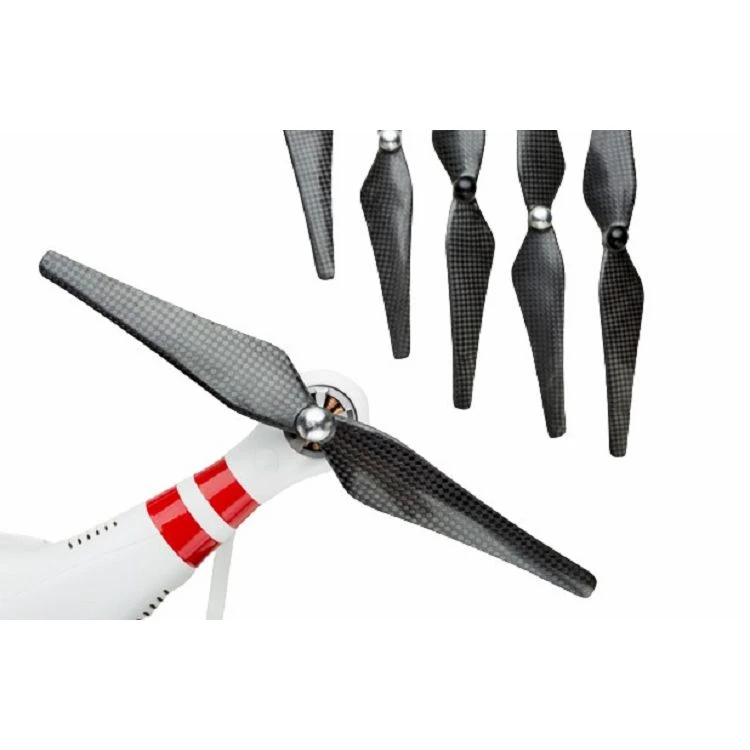
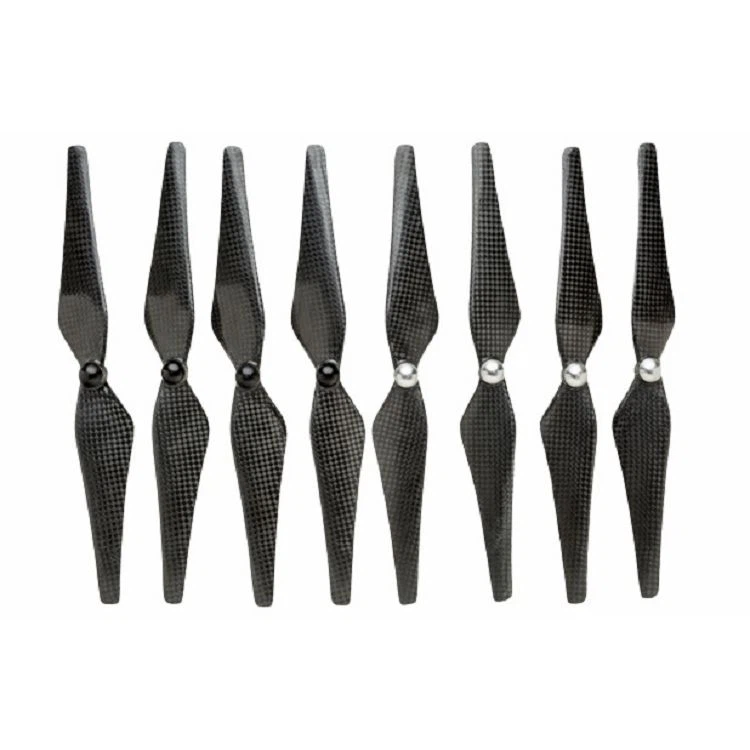
Drone propeller, also known as a drone blade, is a crucial component of a drone's propulsion system. It is responsible for generating the lift required to keep the drone airborne and to control its movement in the air.
Advantages of Carbon for Drones
Weight saving
Carbon fiber reinforced plastics (CFRP) are known for their high strength and low weight. The targeted placement of fibers using TFP makes it possible to produce structures that are very light yet extremely resilient. This leads to improved performance and efficiency of the drone, as the overall weight is reduced.
01
Increased strength and stiffness
The targeted arrangement of the fibers makes it possible to maximize the strength and stiffness of the structure exactly where it is needed. This results in an overall more robust and stable drone that is more resistant to loads and vibrations.
02
Tailor-made properties
Carbon fibers in combination with TFP make it possible to adapt the mechanical properties of the structure precisely to the requirements of the design. This allows structures to be developed that optimize specific performance characteristics such as flexural strength, tensile strength or impact strength.
03
Improved aerodynamic efficiency
By using carbon fibers in wings, fuselages and propellers, drones can be aerodynamically optimized, resulting in improved flight performance and efficiency. The smooth surface and tailored structure reduce drag and improve maneuverability.
04
Longer service life and low maintenance
Carbon is corrosion-resistant and shows high resistance to fatigue and wear. As a result, drones that use CFRP structures often have a longer service life and require less maintenance compared to those with conventional materials.
05
Why Choose Us
Customer service
We firmly believe that we offer THE BEST customer support in the industry and it is our ongoing goal to continually improve on our services. As an independently owned and operated business, we are able to provide the most accommodating service possible.
Competitive prices
We offer our products at competitive prices, making them affordable for our customers. We believe that high-quality products should not come at a premium, and we strive to make our products accessible to all.
Quality assurance
In terms of quality assurance, the company strictly follows the standards and norms of the industry quality system. Adopt industry-leading testing equipment to ensure product quality and good reputation.
Rich experience
Has a long-standing reputation in the industry, which makes it stand out from its competitors. With over many years of experience, they have developed the skills necessary to meet their clients' needs.
High quality products
We always put customer needs and expectations in the first place, refine on, continuous improvement, to seek every opportunity to do better, to provide customers with their expectations of quality products, to provide customers with the most satisfactory service at anytime.
Professional team
We have a team of skilled and experienced professionals who are well-versed in the latest technology and industry standards. Our team is dedicated to ensuring that our customers get the best service and support possible.
The design of unmanned aerial vehicles always involves complex design optimization variables and decisions. Existing designs of both civilian and military UAVs have provided useful empirical relations and insights for designers to apply the existing design approaches. But due to the insufficiency of data a wide variety of structural configurations & mission profiles have led to the problem of Unmanned Aerial Vehicle design being less well defined. Weak or faulty structural design has led to various operational challenges, from mission failure to payload malfunctioning to unsatisfactory flight performance. If the structural integrity of the whole airframe does not meet its requirements, then the whole purpose of the UAV mission ceases to exist. This paper aims to propose a structural design optimization strategy for a H8 Octacopter UAV. The octa-copter is designed to transport a payload of 6 kg by minimizing and analyzing the structural weight of the UAV by using FEM techniques. Based on the analysis, proper material selection is made to satisfy the various design parameters.
Why is Carbon Fiber Preferred for Aircraft Bodies
Carbon Fiber Increases Fuel Efficiency
It' s no secret that in the airline industry, the lighter the aircraft, the less expensive it is to operate. Lower weight improves fuel efficiency, which significantly decreases the overall cost to operate planes. Since carbon fiber composites are incredibly strong and stiff for their weight, it makes sense that aircraft manufacturers are leaning more and more in that direction. Using carbon fiber composites to build an airplane reduces its weight by up to 20%, versus the weight of a traditional aluminum plane. For each kilogram of weight reduction, experts estimate a savings of about $1 million in costs over the life of the plane. That adds up to enormous savings!
Carbon Fiber Improves Aerodynamic Performance
In addition to decreasing weight, another important factor for aircraft fuel efficiency is aerodynamics. The sleeker the design, the more fuel-efficient the plane becomes. Because carbon fiber composite fabrication processes can produce very smooth yet complex geometries, aircraft designers can more easily optimize the aerodynamics of a carbon fiber aircraft. Additionally, the stiffness of carbon fiber facilitates the use of swept wing designs in commercial aircraft, which cuts fuel consumption by up to 5%, by reducing aerodynamic drag.
Carbon Fiber Reduces the Number of Parts
Another area where using carbon fiber in manufacturing aircraft helps reduce costs is in the number of parts needed to build the plane. For example, the Airbus A380 is typically built with approximately six million parts. However, since carbon fiber composite parts are molded, each mold can be designed so that several different parts are combined into one mold, thereby significantly reducing the number of parts needed to build the plane. With fewer components needed to build the plane, less manufacturing time is also required. Furthermore, because carbon fiber parts weigh less, fewer people are needed to maneuver and assemble them. All of these factors add up to significant cost savings in the manufacturing of the aircraft.
Future Aircraft Designs Using Carbon Fiber
Using carbon fiber to build aircraft, instead of traditional metals, offers aircraft designers more flexibility when it comes to manipulating aerodynamic efficiency and saving fuel. This flexibility allows the opportunity to change up traditional plane designs as well. Future commercial aircraft could include designs where the fuselage and wings blend together, similar to some military aircraft today. This type of design greatly improves a plane' s lift-to-drag ratio, making the plane more aerodynamically efficient while still reducing weight. A recent Airbus concept plane introduced a plane with a fatter, curved fuselage, designed to improve airflow and provide more cabin space. Longer, thinner wings would reduce drag and improve fuel efficiency. A U-shaped tail acts as a shield to reduce engine noise. It is carbon fiber that allows all these concepts to even be conceived.
Application Of Carbon Fiber Composite Materials In Drones


Because drones are generally small in size and light in weight, and there are differences from the safety standards of manned aircraft, it is necessary to develop and follow a new standard system in material design and processing technology design. Drone material designers are constantly researching and exploring content. At present, the main manufacturing methods include autoclave forming, vacuum bag forming, and compression forming.
The development of drones was first due to military needs. Nowadays, more and more civilian fields are starting to need drones to play a role. Drones are not only widely used in atmospheric research, environmental monitoring, fire prevention and disaster relief, but also in sports photography, leisure and entertainment, and commercial activities. Therefore, reducing manufacturing costs, especially carbon fiber composite materials for drones, has become a key research object at this stage.
Carbon fiber drone arm
As a special flying equipment, the UAV does not need to consider human physiological capacity, it can give full play to the performance of carbon fiber composite materials, and consider more design space; it takes into account the load distribution and force of the UAV. Solid carbon fiber usually adopts the integrated design of the casing, which can reduce the weight by about 30%, and also reduce the number of fastener parts and components, and ensure safety. And for the drones in different environments, we can study and design a suitable aerodynamic shape.
Based on the application in other fields, we have further developed, improved and improved the manufacturing process of carbon fiber drones by adopting mechanical automation manufacturing technology. Including the automatic tape laying technology and automatic wire laying technology widely used in the field of aircraft manufacturing, together with winding, pultrusion and other molding technologies, we have developed a carbon fiber composite material manufacturing molding technology suitable for drones. The application of carbon fiber composite materials on drones has explored more technical routes.
Carbon fiber drone housing
In some special fields such as defense and military applications, drones also need to have some stealth performance. Because general carbon fiber composite materials have limited wave transmission and absorption properties, therefore, research and development of absorbing coatings that are compatible with carbon fiber composite materials and have efficient absorbing effects, or by improving the resin matrix to develop Carbon fiber composite materials, or the integrated design of the airfoil fuselage, reduce the reflection of electromagnetic waves to achieve the stealth function.
With the increasing application of carbon fiber composite materials in drones, it is necessary to carry out professional repair technology research on carbon fiber composite materials, especially to develop characteristics that can be adapted to the use of drones. Technology that can repair drone structural materials efficiently, quickly, and at low cost when damaged. At present, there has been some research progress in carbon fiber composite repair technology in China, but no perfect system has been formed at present, especially the low-cost rapid repair technology for carbon fiber composite materials for drones will be an important area for future research.
Carbon fiber is a robust and durable material used in many applications, including drone parts, to enhance lightweight and robust design. The types of carbon fiber drone parts include the following;
Propellers
Drone propellers are among the main components of a drone that are responsible for producing thrust and lift. They come in a variety of sizes and shapes, and they can be made from different materials, including plastic, wood, and carbon fiber. Carbon fiber propellers are preferred over other materials because they are lighter, stiffer, and more durable. They also offer better performance, efficiency, and stability compared to propellers made from other materials. In addition, carbon fiber propellers are less likely to warp or deform, even under high speeds and loads.
Frames
The frame is the main structure of the drone that houses all the components and provides support and stability. Carbon fiber drone frames are constructed using carbon fiber tubes or sheets. They are lighter than frames made from other materials, such as aluminum or plastic. As a result, they enhance the drone's agility, speed, and maneuverability. Additionally, carbon fiber frames are more robust and less prone to damage from crashes or impacts. They are also more resistant to vibrations, which helps improve the overall flight performance and stability of the drone.
Booms and Arms
Booms or arms are the extended parts of the drone frame to which the propellers are attached. They are usually found in quadcopters or octocopters. Carbon fiber booms or arms are lighter and stronger than those made from other materials, such as aluminum or plastic. This means they can withstand higher loads and stresses without adding unnecessary weight to the drone. They are also more resistant to bending or flexing, which helps maintain the proper alignment of the propellers for smoother and more stable flights. In addition, carbon fiber booms or arms are less likely to resonate with the vibrations produced by the motors and propellers. This can reduce the overall noise level of the drone and make it less disturbing.
How to Maintain the Carbon Fiber Drone Fuselage
The key to maintaining the carbon fiber drone fuselage is regular inspection and maintenance to avoid erosion of the fuselage by external factors such as water and dust.
Specific steps and precautions for maintaining the carbon fiber drone fuselage include:
Check whether the fuselage screws are loose
The carbon fiber fuselage is usually fixed by screws. Regularly checking whether the screws are loose is an important step to prevent damage to the fuselage structure.
Check whether the arm is damaged or loose
The arm is an important part of the drone flight. Check whether the arm connector is free of damage and cracks, and whether the screws are loose to ensure flight safety.
Check whether the shock absorber ball is aging
The function of the shock absorber ball is to reduce vibration during flight. If the outer layer of the shock absorber ball hardens or cracks, it needs to be replaced in time.
Avoid using the drone in bad weather
Rainy, snowy or foggy weather will seriously affect the performance of the drone and even cause damage to the fuselage.
Clean the heat dissipation port and fan regularly
Use a clean air blower to blow away the dirt, and use an alcohol pad to wipe the heat dissipation port to ensure good ventilation.
Check whether the waterproof rubber plug is intact
The integrity of the waterproof rubber plug is directly related to the waterproof performance of the drone. Once an abnormality occurs, it needs to be replaced in time .
Our Factory
Our company is good at composite infusion process, prepreg vacuum bag process, bladder molding process, press mold process, aluminum anodize. We have laser trimming machine, large five-axis machining center, three-axis machining center and smaller CNC equipments, which can be used for metal mold, epoxy foam mold or trimming for composite product. We have complete stainless steel sheet metal production line, which can produce stainless steel products with specified shapes.

FAQ
Hangzhou Chengxin Composite Material Co., Ltd. is one of the most reliable manufacturers and suppliers of carbon fiber drone body in China. With a professional production team, we are able to meet the needs of the majority of our customers. Please rest assured to buy customized carbon fiber drone body from our factory.
Hot Tags: carbon fiber drone body, China carbon fiber drone body manufacturers, suppliers, factory, Large Carbon Fiber Drone Frame, Carbon Fiber Drone Frame


