


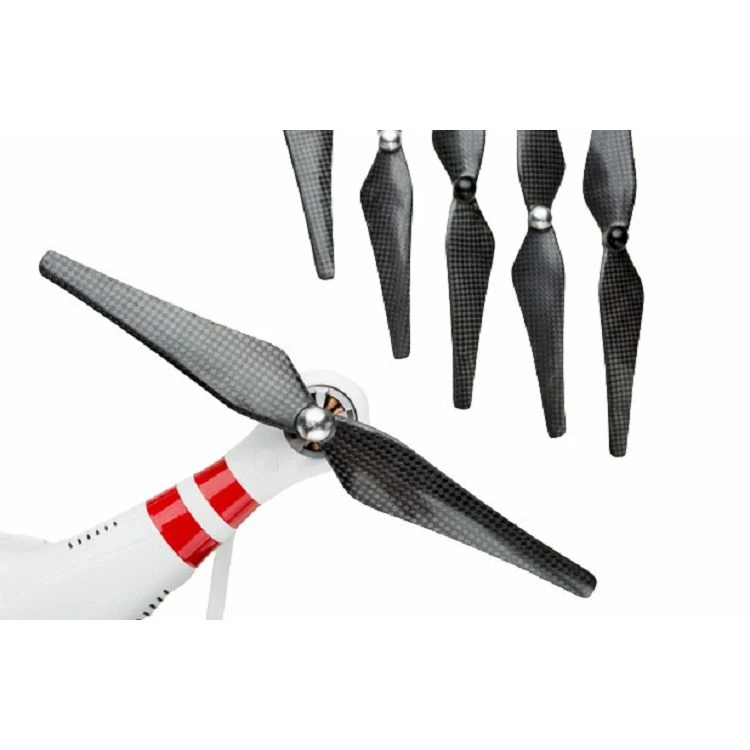
Drone propeller, also known as a drone blade, is a crucial component of a drone's propulsion system. It is responsible for generating the lift required to keep the drone airborne and to control its movement in the air. Drone Propellers come in various sizes and shapes, depending on the type and size of the drone they are designed for. They are typically made of lightweight materials such as plastic or carbon fiber, which allows them to spin at high speeds and generate the necessary lift. Drone propellers are mounted on the drone's motor shafts and are powered by the drone's battery. They are controlled by the drone's flight controller, which adjusts their speed and angle to control the drone's movement in the air. Proper maintenance and replacement of drone propellers are essential for safe and efficient drone operation.
As manufacturers of carbon fiber drone frames, we take great pride in offering our customers a high quality product with a range of features and benefits. With our own factory, we customize frames to suit our customers' needs and preferences, putting customer satisfaction at the top of everything we do.
In recent years, the drone industry has boomed and carbon fiber frames have become increasingly popular with manufacturers and hobbyists alike. Carbon fiber is a lightweight yet strong material that offers several advantages over traditional materials such as aluminum or plastic.

As a manufacturer with our own factory, we are proud to provide customers with high quality products. When it comes to drone racks, the product is sure to meet your needs and exceed your expectations.

As a manufacturer with our own factory, we are proud to provide quality products that meet and exceed our customers' needs and expectations. Our carbon fiber products for hexacopter frames are built to withstand the harshest conditions, making them ideal for those looking for a reliable, durable and high performance solution.

This product is highly sought after by drone enthusiasts and professionals. It is a lightweight, durable and versatile frame that has become the first choice for many when building a quadcopter.

Large Carbon Fiber Drone Frame
A carbon fiber drone frame is a structural component of a drone that is made of carbon fiber. Carbon fiber is a composite material made of long, thin strands of carbon that are woven together and bonded with a resin.

Carbon fiber is known for its high stiffness or rigidity. Drones require a rigid structure to maintain stability and responsiveness during flight.

A must-have for drone racing enthusiasts who demand high speed and superior flight control. As a manufacturer with our own factory, we take pride in the superior quality of our products and offer custom solutions to meet your specific needs.

Drone propeller, also known as a drone blade, is a crucial component of a drone's propulsion system. It is responsible for generating the lift required to keep the drone airborne and to control its movement in the air.
What Are The Performance Advantages Of Carbon Fiber Drone Propellers
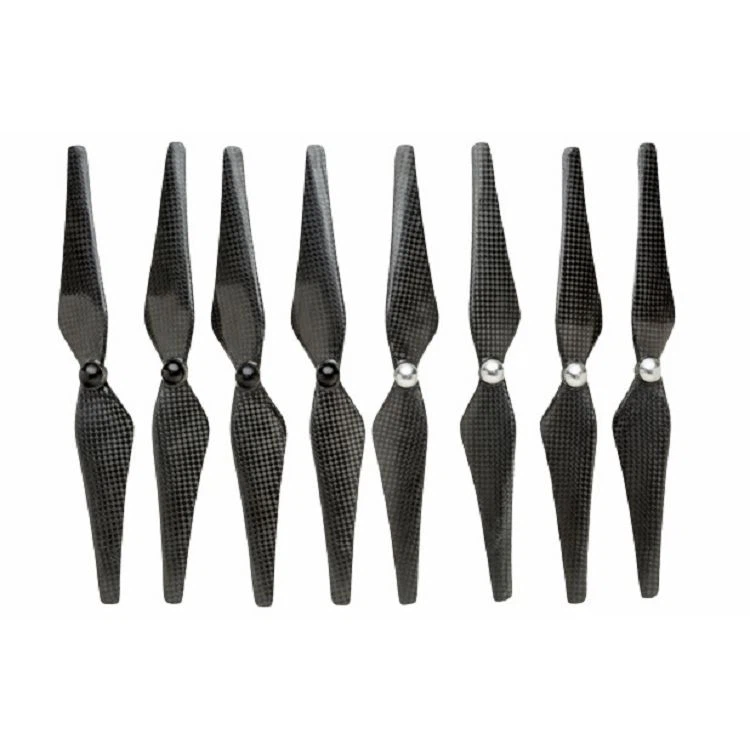
Carbon fiber propellers have become increasingly popular in the drone industry due to their numerous performance advantages. Compared to traditional aluminum or plastic propellers, carbon fiber propellers offer a number of key benefits.
Carbon fiber propellers are significantly lighter than metal or plastic propellers. This reduction in weight allows drones to operate more efficiently and improves their overall speed and maneuverability. In addition, carbon fiber propellers are more durable than plastic propellers and have a better strength-to-weight ratio than metal propellers. This means that they can withstand more stress and damage without compromising their performance.
Another benefit of carbon fiber propellers is their resistance to corrosion and rust. Metal propellers are prone to rusting and can quickly lose their sharp edges, which negatively impacts their performance over time. Carbon fiber propellers do not rust or corrode, making them ideal for use in harsh environments where exposure to water or moisture is a concern.
Carbon fiber propellers have a smoother surface finish than traditional propellers. This smooth surface reduces drag and vibration, which in turn improves drone stability and reduces noise. The increased stability of carbon fiber propellers also allows drones to fly more accurately and precisely, making them ideal for aerial photography and videography applications.
The benefits of carbon fiber propellers make them an excellent choice for drone enthusiasts and professionals alike. Their durability, light weight, and resistance to corrosion and rust make them an ideal choice for a variety of drone applications, while their smooth surface finish and increased stability improve the performance and accuracy of drones in both recreational and commercial settings.
Why Choose Us
Customer service
We firmly believe that we offer THE BEST customer support in the industry and it is our ongoing goal to continually improve on our services. As an independently owned and operated business, we are able to provide the most accommodating service possible.
Competitive prices
We offer our products at competitive prices, making them affordable for our customers. We believe that high-quality products should not come at a premium, and we strive to make our products accessible to all.
Quality assurance
In terms of quality assurance, the company strictly follows the standards and norms of the industry quality system. Adopt industry-leading testing equipment to ensure product quality and good reputation.
Rich experience
Has a long-standing reputation in the industry, which makes it stand out from its competitors. With over many years of experience, they have developed the skills necessary to meet their clients' needs.
High quality products
We always put customer needs and expectations in the first place, refine on, continuous improvement, to seek every opportunity to do better, to provide customers with their expectations of quality products, to provide customers with the most satisfactory service at anytime.
Professional team
We have a team of skilled and experienced professionals who are well-versed in the latest technology and industry standards. Our team is dedicated to ensuring that our customers get the best service and support possible.
The Carbon Fiber Construction of Large Propellers
Props for your little RC airplane or drone are effectively consumables. They' re made of plastic, they' re cheap, and you' re going to break a lot of them. When you start swinging something larger than 12 inches or so, things start getting expensive. If you' re building gigantic octocopters or big RC planes, those props start adding up. You might not think you can build your own gigantic carbon fiber propellers, but is here to prove you wrong with an incredible video demonstration of the construction of large propellers.
The key ideas behind the build are laid out in a video demonstration for building a single prop. The base begins with a CNC wire cut foam air foil. This foam airfoil is first modified for the attachment point by cutting a plug out of the root of the airfoil which is filled with epoxy.
With the skeleton of the airfoil complete, the build then moves on to laminating the foam core with carbon fiber. The epoxy itself is laminating epoxy, although we suspect the ubiquitous epoxy used for all those live-edge 'river' coffee tables will also work as well. This epoxy is spread out on a table, the carbon fiber laid over it, and a second layer of carbon fiber laid over that. This is wrapped around the foam core, then cured with an electric heating pad.
Of course, this is only a demonstration of making a single blade for a prop. The next trick is turning that single blade into a propeller. This is done with a cleverly machined hub, attached through that epoxy plug placed in the foam core. The results are just as good as any large prop you could buy, and this has the added benefit of being something you made, not bought.
Drones Made of Carbon: Propellers, Frames, Housings and More
The TFP process can be used to produce numerous different parts for drones, which are particularly impressive due to their low weight and high strength. Among other things, we manufacture for you:
Fuselage, frame and wings
Carbon fiber reinforced plastics (CFRP) are often used for the structure of drone fuselages, frames, chassis or even wings, as they offer high strength combined with low weight. By using TFP, the fibers can be placed in precisely defined areas to maximize strength where it is needed most, while avoiding unnecessary weight in other areas.
Rotors and propellers
Carbon fibers are used in rotors and propellers or winglets of drones to make them lighter and at the same time more resistant to loads. TFP can help to optimize the structural integrity and efficiency of these components.
Landing gear, housings and more
Carbon fibers are also suitable for the landing gear and housings of drones to make them more robust and resistant to impacts and other environmental influences. Battery base carriers, notching devices, motor carriers, three-blade holders, etc. are other possible areas of production.
How Can You Choose the Best Materials for Your Drone's Frame and Propellers
Choosing the best materials for your drone's frame and propellers is not a trivial task. You have to balance several factors, such as weight, strength, durability, aerodynamics, and cost. In this article, you will learn some basic principles and tips to help you make the right decision for your drone project.
Frame materials
The frame of your drone is its skeleton, and it must support the weight of components, withstand the forces of flight, and protect the electronics from damage. Common materials for drone frames are carbon fiber, aluminum, wood, and plastic. Each material has its own advantages and disadvantages depending on the design goals and budget. Carbon fiber is light and strong but brittle and expensive, while aluminum is a good balance between weight and strength but can bend or dent easily. Wood is an affordable and easy to work with material but can warp or crack, while plastic is durable but can deform under heat or stress.
Propeller materials
Propellers are the blades that spin and create thrust for your drone, and they need to be light, stiff, and efficient to match the size and power of your motors. The three most common materials for propellers are plastic, carbon fiber, and wood. Plastic is the cheapest and most widely available option, but it' s also the least efficient and durable; it can easily bend or break, and generate more noise and vibration than other materials. Carbon fiber is the lightest and stiffest option, however it' s also the most expensive and fragile; it can deliver the best performance and efficiency, yet can damage motors or other parts if it hits something. Wood propellers are a rare niche option that can be more aerodynamic and quieter than plastic or carbon fiber; they can also be customized to fit your drone, though they are heavy and sensitive to humidity and temperature changes.
How to choose
Choosing the best materials for your drone's frame and propellers is not an easy task. It depends on your personal preferences, budget, intended use, and experience level. Still, when considering the weight and size of your drone, remember that lighter materials can improve flight time, stability, and maneuverability, but they can also reduce durability and resilience. Additionally, think about the strength and stiffness of the materials in terms of vibration, noise, and efficiency; stiffer materials can improve these aspects but also increase the risk of damage and interference. Lastly, consider the durability and reliability of your materials to reduce maintenance and repair costs; however, it may also compromise performance and aesthetics. By following these principles and tips, you can select the best materials for your drone's frame and propellers to enjoy a well-designed and well-built drone.
Hybrid VTOL UAVs combine VTOL capability with the standard forward propulsion of a fixed wing UAV. In many hybrid VTOL UAVs, rotary lift propellers are typically incorporated into the aircraft's wings, which then transition for forward flight.
Drone propeller manufacturers usually specify two main measurements, quoted in the form A x B. The first number is the total length of the propeller from end to end. The second is the pitch, which is related to the angle of the propeller and is defined as how far the propeller will move forward under ideal conditions for every rotation. This can be thought of in a similar way to how far a screw will sink into a surface for every rotation of the screwdriver.
Shorter propellers require less energy to get up to a particular speed, and due to reduced inertia are easier to control and quicker to change speed. Longer propellers generate more lift for a particular RPM and create greater stability when hovering, but require more motor power.
Propellers with higher pitch will provide more lift than a flatter blade and allow a drone to fly faster for a particular RPM, but will drain the drone battery faster due to requiring more power from the motor.
Heavy-lift drones will typically require longer propellers with smaller pitch, as they require stability rather than speed, and will be able to carry larger batteries or power sources such as hydrogen fuel cells in order to offset the increased requirements.
How to Replace Drone Propellers
Propellers will directly affect the drone's flight condition. How to replace it correctly is also a concern for every pilot when the propeller must be replaced.
What we know is that drone propellers are used with motors, so we need to make sure we have the necessary accessories on hand. Make sure that you get all the necessary accessories you need besides propellers to be replaced, the right size screws, screwdriver, etc.
1. Unscrew the screws which connecting the propellers to the motor and remove the old propellers.
2. Check the surface of the replacement propellers for any obvious flaws.
3. Check whether the number of screws on hand matches the holes on the propeller. Highly recommend using new screws.
4. Distinguish the CW(Clock Wise) and CCW(Counter Clock Wise) propellers. Each manufacturer will indicate how to differentiate, such as T-MOTOR's propellers, will mark L for CW and R for CCW.
5. After completing the inspection work, start the installation. If there are any prop cover plates in your screw accessory bag, take them out. Place them above the propeller hole to ensure the holes are aligned. (If no prop cover plate is needed, please ignore this step).
6. Place the mounting screws into the corresponding holes.
7. Place the propeller correctly on the motor with the screws facing the holes.
8. Tighten the screws with a screwdriver.
9. Finish installation.
A Guide To Maintaining Drone Propellers
Visual Inspection
Start by visually inspecting the propellers for any signs of damage, such as cracks, chips, or bent blades. Check for loose screws or fittings that may affect the propeller's stability during flight. If you notice any issues, it is important to address them before proceeding with further maintenance.
Cleaning the Propellers
Regularly clean your drone's propellers to remove dust, dirt, or debris that may accumulate during flights. Use a soft brush or a lint-free cloth to gently wipe the blades, ensuring that no residue is left behind. Avoid using harsh chemicals or abrasive materials that could damage the propellers.
Balancing the Propellers
Properly balanced propellers are essential for smooth and vibration-free flights. Imbalanced propellers can lead to reduced flight performance and increased wear and tear on the motor. To balance the propellers, you can use a propeller balancer or a simple DIY method with a shaft and a set of bubble levels. Follow the manufacturer's instructions or seek guidance from experts for the best results.
Tightening and Securing
Check the tightness of the propeller screws or nuts, ensuring they are securely fastened. Loose propellers can not only affect flight stability but also pose a safety risk. However, be cautious not to overtighten them, as it may lead to stress fractures or damage the propeller hub.
Replace Damaged Propellers
If you identify any significant damage to a propeller, it is crucial to replace it promptly. Using damaged propellers can compromise flight performance and risk damage to other drone components. Always have spare propellers available and ensure they are compatible with your drone model.
Storage and Transportation
When not in use, store your drone and propellers in a clean and dry environment. Protect them from direct sunlight, extreme temperatures, and humidity, as these conditions can degrade the propeller material over time. During transportation, use a dedicated case or bag that provides adequate protection against impacts and vibrations.
Our Factory
Our company is good at composite infusion process, prepreg vacuum bag process, bladder molding process, press mold process, aluminum anodize. We have laser trimming machine, large five-axis machining center, three-axis machining center and smaller CNC equipments, which can be used for metal mold, epoxy foam mold or trimming for composite product. We have complete stainless steel sheet metal production line, which can produce stainless steel products with specified shapes.

FAQ
Hangzhou Chengxin Composite Material Co., Ltd. is one of the most reliable manufacturers and suppliers of carbon fiber drone propellers in China. With a professional production team, we are able to meet the needs of the majority of our customers. Please rest assured to buy customized carbon fiber drone propellers from our factory.
Hot Tags: carbon fiber drone propellers, China carbon fiber drone propellers manufacturers, suppliers, factory, Carbon Fiber Drone Frame, Large Carbon Fiber Drone Frame


